

The Mountain Elgon area is ecologically and socioeconomically important. Numerous nongovernmental organizations and research institutions conduct studies in the area with various objectives. Drawing on my field experience from a recent data collection exercise, I would like to offer advice to fellow beginners interested in conducting studies in the Mountain Elgon area, particularly during the rainy season.
Blog by Derick Kisegu.
While in the mountain Elgon area, expect the weather to change at any time, especially if you plan to sample very high altitudes. The clouds don’t need to gather much for it to start raining. The situation is always tempting in the morning: the sky is usually clear, and there is a promise of a good working day. However, just a few hours into the day, the weather can change, and it may rain for the rest of the day. In cases of prolonged drizzles, a raincoat can help.
However, sometimes it is so severe that you will need to take shelter at a nearby household, if they allow you in, and wait until it stops for you to return to your room and wait for the next day.
Always consider wearing gumboots with a strong grip, as this will reduce the chances of slipping. If possible, avoid using bodaboda (local motorcycle taxis) after it rains. There is a high risk of road accidents because the roads become very slippery after rain. On addition to a raincoat, one should not forget a heavy sweater for use especially at night because it can be cold. Of utmost importance is also the protection of any electronic gadgets being used in the field from contact with the rain.
Due to the mountainous nature of the area, walking longer distances is inevitable. However, some roads are too steep to make one sweat when it is raining. To save time, prepare a lunch pack. Also, prepare to return to your room in a timely manner before evening rains set in. Where guest houses are far, use the reconnaissance time to look out for potential host homes. This has some advantages; you’re easily assimilated into the community, and during informal conversations with the hosts, you learn more about the area, and supper is assured. But remember every home has its rules so prepare to adjust.
In some regions, starting field data collection at 11 AM can be advantageous because farmers are usually back from their gardens by then. However, in Mount Elgon, farmers often work throughout the entire day, sometimes even during light rains. In such cases, you may need to actively seek out farmers in their gardens, which can be challenging if not well planned.
This challenge can be minimised by choosing a local guide who commands respect from the community and has detailed knowledge of the area, including the locations of farmers’ gardens.
In summary, fieldwork in Mount Elgon can be enjoyable if one is well-prepared both mentally and physically.
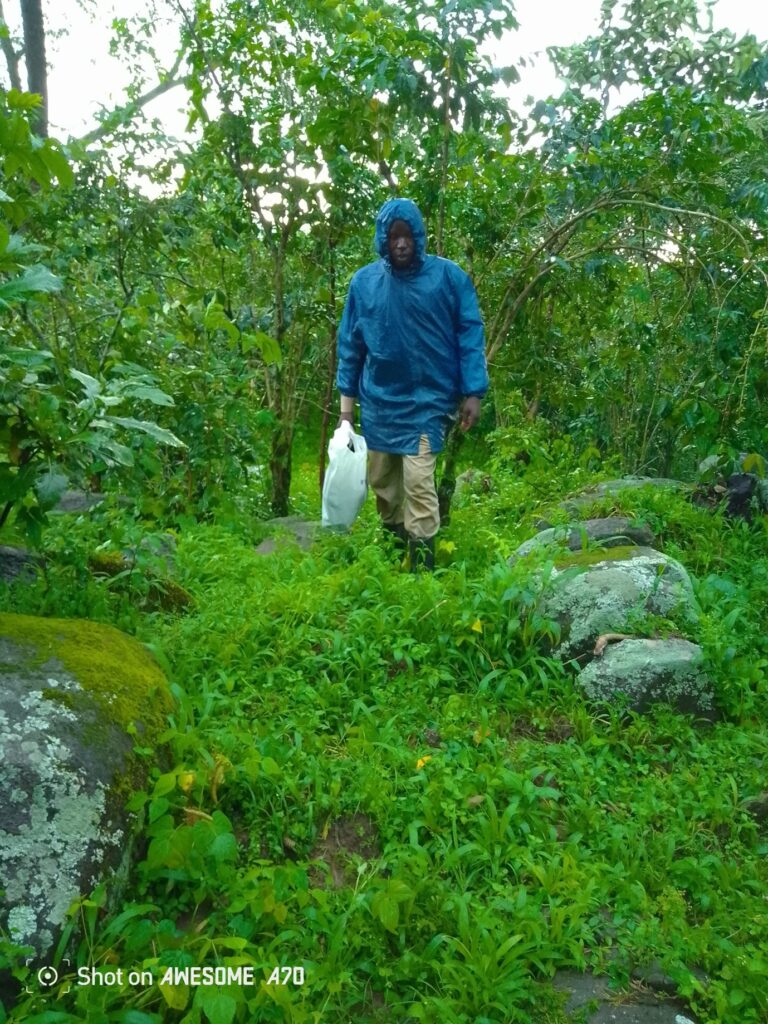
Kisegu Derick coming out of a coffee farm in Bufumbo sub-county amidst slight showers